Velocidad de Escape

Why Ghostty Finally Became My Terminal of Choice

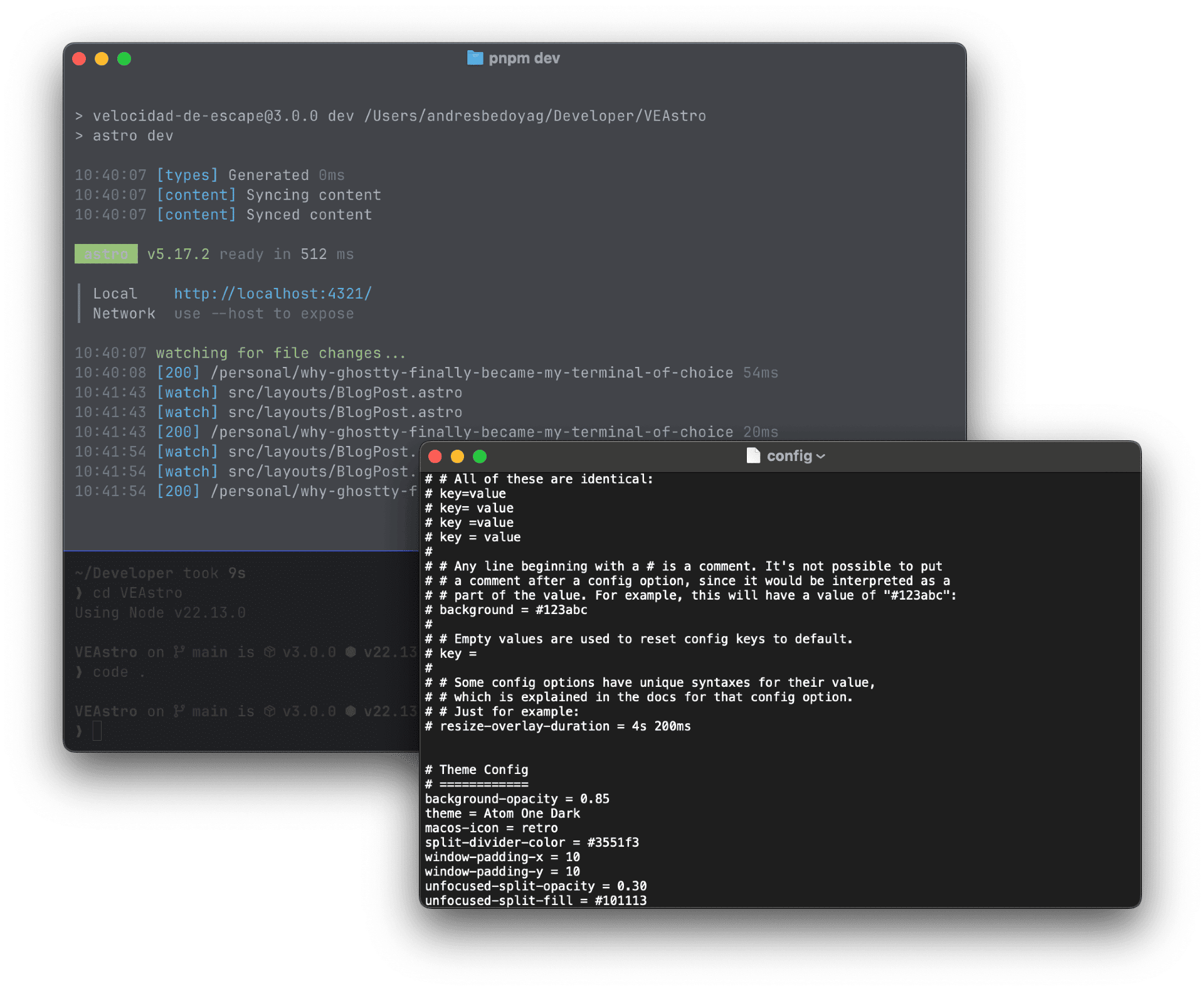
I’ve spent years jumping between terminals. Back in my early Linux days, I was all in on **Terminator**. Splits everywhere, tiling layouts, keyboard-driven workflows, it felt powerful and hacker-ish in the best way. When I moved more into macOS, I lived inside **iTerm** for a long time. Later, I gave **Warp** a serious shot, curious about its modern take on the terminal experience. Each one had something I liked. But none of them made me stop looking. Until Ghostty. ![Ghostty Terminal](/images/posts/ghostty-terminal.png) ## It Feels Fast in a Way You Notice The first thing I noticed...
Personal

Building RunStack: A journey through vibe coding

This idea came about many months ago, I tried a couple of times but it definitely required a deep knowledge of Rust to be able to do some things, so I left it in oblivion until a couple of days ago when I wanted to try the famous vibe coding. **RunStack** is a desktop application that allows you to manage and run Node.js, Deno, and Bun projects from a single place. This post documents the development journey, exploring the technologies used, the most complex technical challenges we faced, and the solutions we implemented to create a robust and efficient tool. ## The Technology Stack ###...

Personal

AI

Result Pattern vs Try/Catch in JavaScript: Streamlining Error Handling

The **Result pattern** is a different way to handle errors in JavaScript that many developers are starting to like. It's becoming popular because it makes error handling clearer and more predictable. Instead of using `try/catch`, which throws and catches errors, the **Result pattern returns a simple object**. This object always tells you if something worked or failed, and gives you either the result or the error message. This idea comes from other programming styles and languages, like _Rust_. In JavaScript, it's not built-in, but developers can choose to use it. It helps them think about...

JavaScript

Fundamental Principles in Software Engineering

When I started my journey in the world of software development, I found myself constantly overwhelmed by the multitude of factors to consider when writing a program. I often fell into the trap of overthinking every aspect, from choosing the optimal data structure to deciding between different programming paradigms. This tendency led to what can be aptly described as "paralysis by analysis" — a state where I was perpetually stuck in the preliminary stages of planning and analysis, without ever daring to move forward and actually develop a prototype. It wasn't until one transformative moment...

CS